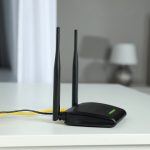


Maintaining fast and reliable WiFi in a large home can be challenging due to distance, walls, and interference. Proper optimization ensures consistent speeds in every room, no matter how big your home is.
1. Assess Your Home’s Layout
- Identify areas with weak WiFi coverage
- Note the number of floors, walls, and construction materials
- Helps determine router placement, mesh nodes, or extenders
2. Choose the Right Router
- Modern routers with WiFi 6 or WiFi 6E support multiple devices efficiently
- Dual-band or tri-band routers reduce congestion
- High-gain antennas improve range
3. Optimal Router Placement
- Place the router centrally and elevated
- Avoid placing near thick walls, metal objects, or electronics that cause interference
- Keep it open and unobstructed for maximum signal coverage
4. Use Mesh WiFi Systems
- Mesh networks use multiple nodes to eliminate dead zones
- Each node communicates seamlessly, creating one large WiFi network
- Ideal for large homes with multiple floors or complex layouts
5. Consider WiFi Extenders or Access Points
- WiFi extenders repeat the signal to distant areas
- Access points create additional network nodes connected via Ethernet
- Extenders are simpler, while access points provide more stable speeds
6. Optimize WiFi Channels
- WiFi interference comes from neighboring networks
- Use apps like NetSpot or WiFi Analyzer to check channel congestion
- Switch to less crowded channels to reduce interference
7. Separate Networks for Devices
- Create different networks for:
- High-bandwidth devices (PCs, smart TVs)
- IoT devices (smart lights, thermostats)
- Guest devices
- Improves overall performance and security
8. Update Firmware Regularly
- Router manufacturers release updates to improve performance and security
- Enables support for newer devices and faster WiFi standards
9. Use Wired Connections When Possible
- For high-demand devices like gaming consoles, PCs, and media servers, use Ethernet
- Reduces load on WiFi and ensures stable speeds
10. Minimize Interference
- Keep routers away from microwaves, cordless phones, and other electronics
- Avoid dense walls or floors in direct signal paths
- Consider WiFi 5 GHz for faster speeds over shorter distances, 2.4 GHz for wider coverage
11. Monitor Network Performance
- Regularly check speed and connectivity in different areas
- Adjust router or mesh node placement as needed
- Identify bandwidth-heavy devices that may slow down the network
12. Benefits of Optimized WiFi in Large Homes
- Consistent speed throughout the home
- Reduced dead zones and dropped connections
- Smooth streaming, gaming, and remote work
- Better device management and network stability
Conclusion
Optimizing WiFi in large homes requires strategic placement, modern hardware, and proper configuration. Key strategies:
- Assess your home layout and signal needs
- Use mesh systems or extenders to eliminate dead zones
- Separate networks for different devices and update firmware regularly
- Use wired connections for high-demand devices
With these tips, every room in your home can enjoy fast, reliable, and stable WiFi, ensuring seamless connectivity for all your devices.
Visited 18 times, 1 visit(s) today