

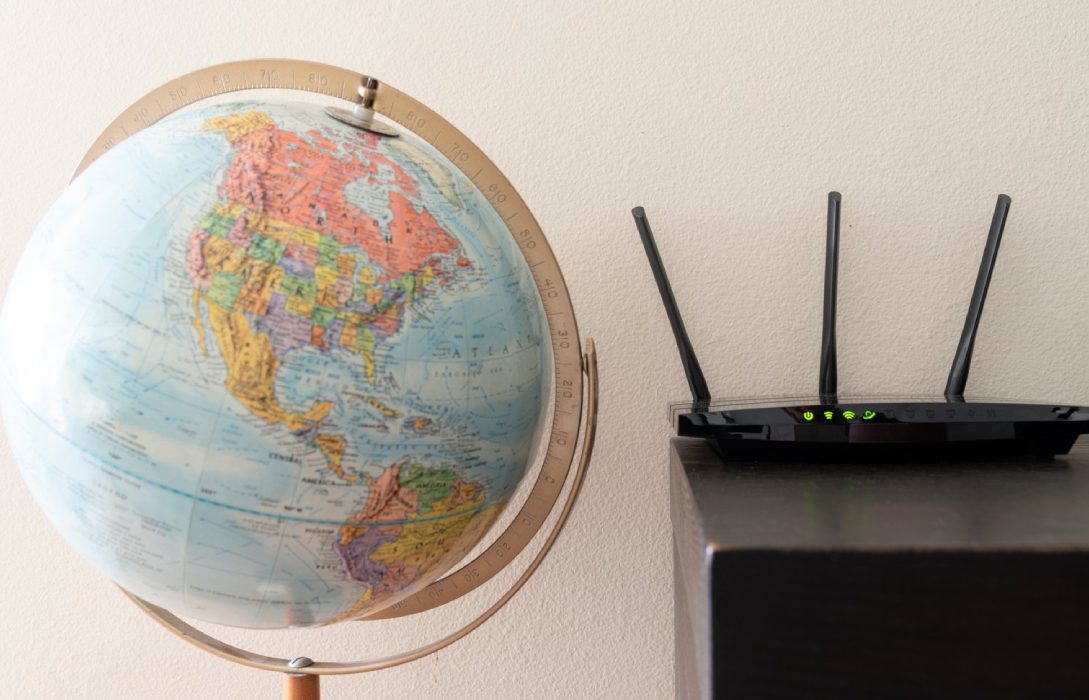
One of the biggest advantages of satellite internet is its ability to provide connectivity anywhere in the world, including rural, remote, and underserved regions. Unlike fiber or cable networks, which require physical infrastructure, satellite internet relies on orbiting satellites to deliver internet signals directly to users.
This guide explores global satellite coverage, differences between GEO and LEO networks, provider reach, and challenges in achieving worldwide connectivity.
Understanding Satellite Internet Coverage
Satellite internet coverage depends on satellite type, orbit, and constellation design:
1. Geostationary (GEO) Satellites
- Orbit approximately 35,786 km above the equator
- Remain fixed relative to a point on Earth
- Provide continuous coverage over large regions
- Example: HughesNet, Viasat
- Limitations: Coverage gaps at extreme latitudes; high latency
2. Low Earth Orbit (LEO) Satellites
- Orbit 500–2,000 km above Earth
- Move rapidly across the sky; users switch connections between satellites
- Require constellations of hundreds to thousands of satellites for continuous coverage
- Example: Starlink, OneWeb
- Advantages: Low latency, global coverage including polar regions
3. Medium Earth Orbit (MEO) Satellites
- Orbit 2,000–35,786 km above Earth
- Balance between coverage and latency
- Emerging networks aim to expand global connectivity
Global Coverage Map
1. North America and Europe
- Most areas are covered by both GEO and LEO satellites
- Fiber and cable are also widely available, but satellite ensures rural access
2. Asia and Africa
- Remote areas benefit from satellite coverage where terrestrial networks are limited
- LEO constellations expanding coverage in Africa, Southeast Asia, and the Middle East
3. South America
- Rural regions like the Amazon rainforest rely on satellite internet
- LEO satellites provide higher speeds than GEO alternatives
4. Polar Regions
- Traditional GEO satellites have limited coverage
- LEO constellations can provide connectivity to Antarctica, northern Canada, and Greenland
5. Oceans and Mobile Coverage
- Satellite internet allows ships, oil rigs, and research vessels to stay connected
- LEO satellites reduce latency for maritime applications
Key Satellite Internet Providers and Their Coverage
| Provider | Satellite Type | Coverage Area | Notes |
|---|---|---|---|
| Starlink | LEO | Global (except some polar gaps) | Expanding rapidly; low latency |
| HughesNet | GEO | North America, parts of South America | Widely available in rural areas |
| Viasat | GEO | Americas, Europe, parts of Africa | Provides high-capacity GEO coverage |
| OneWeb | LEO | Global (partial, expanding) | Focus on enterprise and government |
| Inmarsat | GEO/MEO | Oceans and remote regions | Primarily for maritime and aviation |
Factors Affecting Worldwide Satellite Coverage
1. Orbital Mechanics
- GEO satellites cover wide areas but cannot reach high latitudes effectively
- LEO satellites need large constellations for uninterrupted coverage
2. Terrain
- Mountains, forests, and buildings can block satellite signals
- Careful dish placement is required for maximum reliability
3. Regulatory Approvals
- Providers must comply with country-specific licensing and frequency regulations
- Some regions may have limited availability due to government restrictions
4. Weather Conditions
- Rain, snow, and storms can affect signal quality, particularly for GEO satellites
Advantages of Global Satellite Internet Coverage
1. Connectivity in Remote Areas
- Supports education, telehealth, business operations, and emergency services
2. Disaster Relief and Emergency Response
- Satellites provide temporary internet access after natural disasters when terrestrial networks fail
3. Maritime and Aviation Applications
- Ships, airplanes, and offshore platforms rely on satellite internet for communication and monitoring
4. Global Business Operations
- Multinational companies can maintain consistent connectivity for remote offices or field teams
Challenges in Achieving Global Coverage
1. Satellite Network Costs
- Launching and maintaining satellites is expensive
- LEO constellations require hundreds or thousands of satellites for full coverage
2. Latency
- GEO satellites have high latency, affecting real-time applications
- LEO satellites reduce latency but require sophisticated handoff between satellites
3. Infrastructure in Remote Areas
- Ground stations, modems, and user equipment are necessary for connection
- Some regions may face logistical challenges in hardware distribution
4. Competition and Regulation
- Spectrum licensing and government regulations can limit coverage expansion
- Providers must navigate international rules to operate globally
Future of Satellite Internet Coverage
1. Expanding LEO Constellations
- Starlink, OneWeb, and Amazon Kuiper plan to deploy thousands of satellites
- Goal: Near-global coverage with low latency
2. Hybrid Networks
- Combining LEO satellites with terrestrial fiber or 5G improves performance and reliability
3. Emerging Markets
- Developing countries will gain access to reliable internet, bridging the digital divide
4. New Technologies
- Advanced satellites with higher bandwidth and adaptive routing will enhance global coverage
- AI-driven network optimization will reduce congestion and improve user experience
Conclusion
Satellite internet is transforming connectivity worldwide, enabling access in rural, remote, and underserved areas. With GEO satellites providing broad regional coverage and LEO constellations delivering low-latency global access, users can now work, learn, game, and communicate from almost anywhere on the planet.
While challenges like weather, regulation, and costs exist, rapid technological advancements and expanding satellite networks are making worldwide connectivity increasingly practical. Satellite internet is no longer a niche solution—it is becoming a cornerstone of global digital infrastructure.