
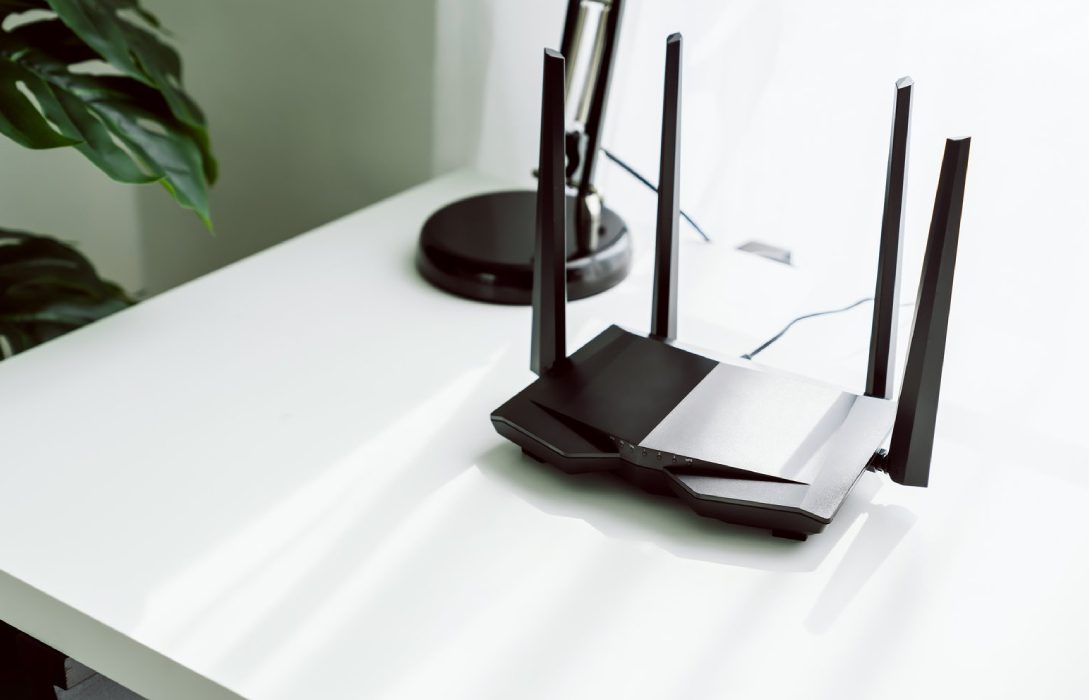
The placement of your router can significantly affect your WiFi speed, coverage, and stability. Even the fastest internet plan won’t deliver optimal performance if your router is poorly positioned. Here’s how to place your router for maximum speed and reliability.
1. Centralize Your Router
- Place the router in a central location in your home
- Ensures even WiFi coverage across all rooms
- Avoid placing it at the edge of your house or in a corner
Central placement minimizes dead zones and improves signal strength.
2. Elevate the Router
- Position the router off the floor, ideally on a shelf or table
- Elevation helps WiFi signals travel unobstructed
- Avoid placing it in closets or under furniture
3. Avoid Physical Obstacles
- Walls, mirrors, thick furniture, and metal objects can weaken the signal
- Keep the router in an open space
- Position antennas (if external) upright for optimal coverage
4. Distance from Interference Sources
- Common household electronics can interfere with WiFi:
- Microwaves
- Cordless phones
- Bluetooth devices
- Keep the router at least 3–6 feet away from such electronics
5. Use Correct Orientation of Antennas
- Routers with multiple antennas often work better when angled differently
- One vertical and one horizontal is ideal for multi-floor coverage
- Ensures both laptops and smartphones receive strong signals
6. Consider Your Home Layout
- Multi-story homes may require a router on the middle floor
- Large homes might benefit from mesh WiFi systems to cover all areas
- Avoid placing router in a basement unless needed for a wired connection
7. Avoid Corners and Hidden Spaces
- Routers hidden behind furniture or inside cabinets lose performance
- WiFi signals travel better in open, elevated locations
- Prioritize areas where devices are most used
8. Reduce WiFi Channel Congestion
- Placement can also affect interference from neighbors’ WiFi networks
- Avoid congested areas and choose less crowded channels on your router settings
9. Optimize for High-Priority Devices
- Place the router closer to devices needing fast and reliable internet
- Examples: gaming consoles, PCs, smart TVs, home offices
- Ensures minimal lag and high-speed performance
10. Experiment and Test
- Try different locations and test WiFi speed with speed test apps
- Monitor download, upload, and ping at each spot
- Choose the location providing the best overall performance
Conclusion
Router placement is a simple but powerful way to improve WiFi speed. Key points:
- Centralize and elevate the router
- Avoid obstacles and interference sources
- Adjust antenna orientation and consider multi-floor coverage
- Test and fine-tune placement based on performance
Proper placement ensures fast, stable internet throughout your home for streaming, gaming, remote work, and smart devices.
Visited 2 times, 1 visit(s) today